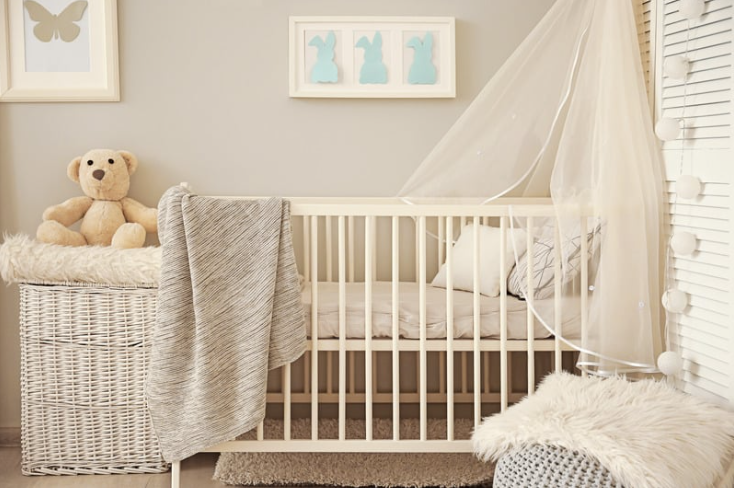
If you wish to maintain high hygiene standards with the baby mattress, you have no choice but to use a mattress protector. This will also give it greater longevity, especially if you’re getting a kids’ mattress for a toddler’s bed. If you expect your child to use the mattress for three years or longer, then you should take steps to protect it.
Steps to Protect Children’s Mattresses
Protection Before Use
After identifying the best mattress for kids, confirm that it is flat and firm. It should also fit the crib or toddler bed perfectly. If there is a gap between the bed and the kids mattress, it shouldn’t be more than two fingers (1 inch/3 cm). After unwrapping the mattress, air it out for a day or two to release gases and odor.
Waterproof Mattress Protector
Ensure you get a well-fitting baby mattress protector. It should be a tight fit. If the baby mattress has wrinkles, the mattress protector is loose. The best mattress for kids should have a breathable, waterproof, and easy-to-clean protector. Besides the protector, you should also fit a clean sheet over the mattress protector. It should also be as tight a fit as the mattress protector.
Maintenance
Spit-ups and diaper leaks are regular occurrences, and you may need to clean the mattress protector and sheet daily to maintain proper hygiene. You can wash the sheet as required. Meanwhile, the mattress protector may not need daily cleaning. You only need to be wiped with soapy water. Ensure it is mild and fragrance-free.
Avoid soaking the mattress protector with a lot of water during daily cleaning to reduce the risk of water leaking onto the mattress. This may cause molds to develop, which may damage the mattress and cause health problems for your child.
When carrying out deep cleaning, preferably once every week, wash the kids mattress protector with hot water to eliminate dust mites and harmful bacteria. Avoid using bleach and fabric softeners as they irritate the baby’s skin.
How to Choose The Best Mattress Protector
A mattress protector may appear optional, but it is not. It is an essential component that contributes to your child’s comfort, especially during infancy and toddler years. If you get the best mattress for kids, you should pair it with the ideal mattress protector.
Here are some of the features to look for when choosing a mattress protector.
- 100% Waterproof: The barrier should provide absolute moisture protection. Avoid a mattress protector with the label “water resistant” because this means it offers protection only to a specific point. There is always the risk that excess liquid will penetrate the mattress cover and ruin the mattress.
- Breathable Material: For your child to sleep comfortably for longer, they need to lie on a cool, breathable surface. Even if the sheet is breathable, its effectiveness will be lowered if the mattress cover is not.
- Quiet Fabric: Mattress protectors are available in different materials, all carrying different price tags. For years, plastic protectors for kids mattress were popular, but they are noisy and tear easily. Today, you can get alternative materials, such as cotton and bamboo. These are softer and quieter.
This guide will help you choose the best mattress protector for the kids’ mattress. You may need a protective cover for a limited period, but it will save you time and money in the long term if you can keep dirt and any damage from the baby mattress.